Made by
A
Abeera Akbar, A2-G1
M
Maryam, A2-G1
At the venue

U
N
L
O
C
K
M
O
R
E
Code Editor: adjust parts of code according to your own preferences.
Debugging: a human-based service which AI has not replaced.
Interactive Simulator: test the circuit before actually deploying it.

Piezo discs use piezoelectric crystals to convert mechanical stress or vibration into electrical energy by generating a voltage that drives an electric current.
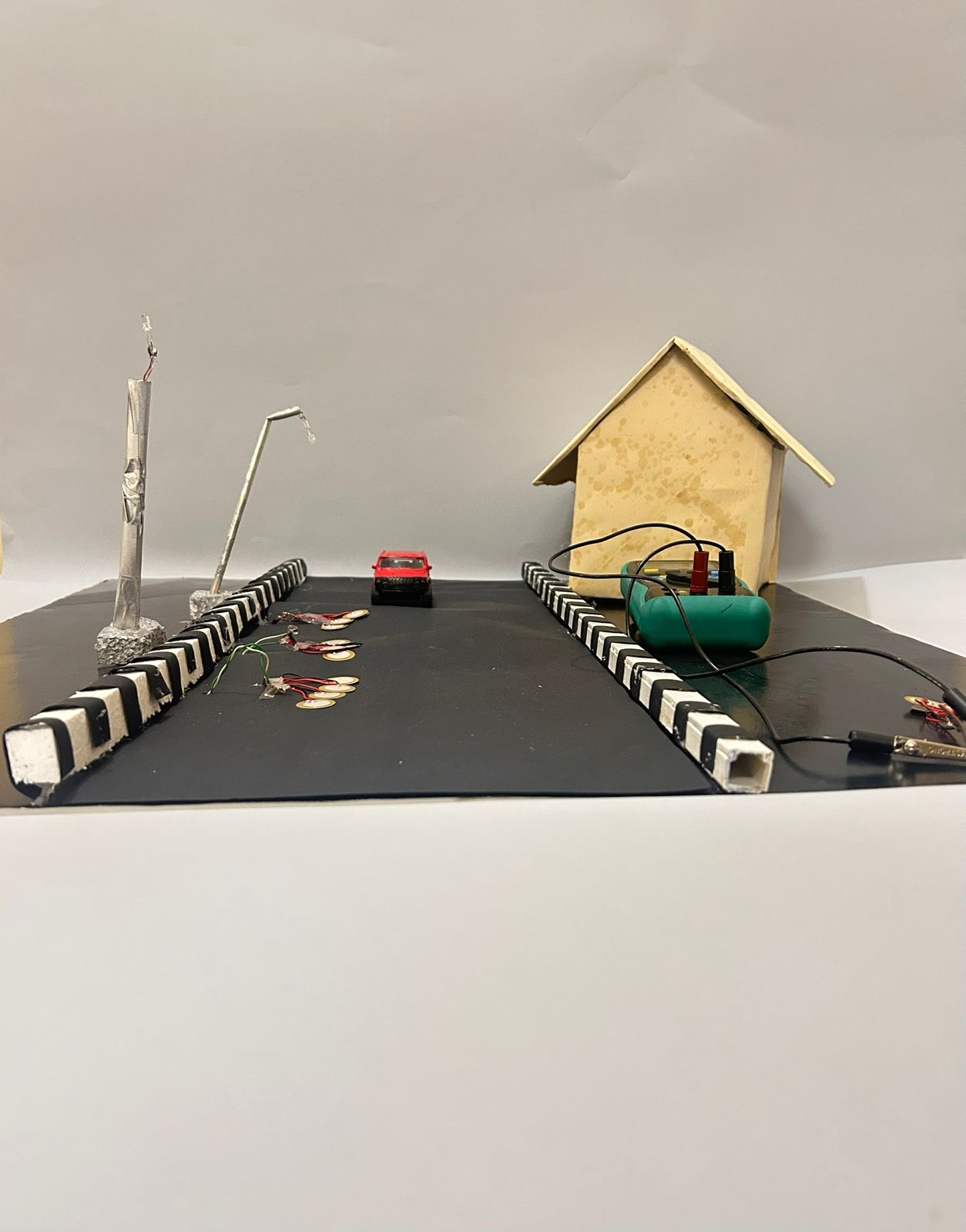
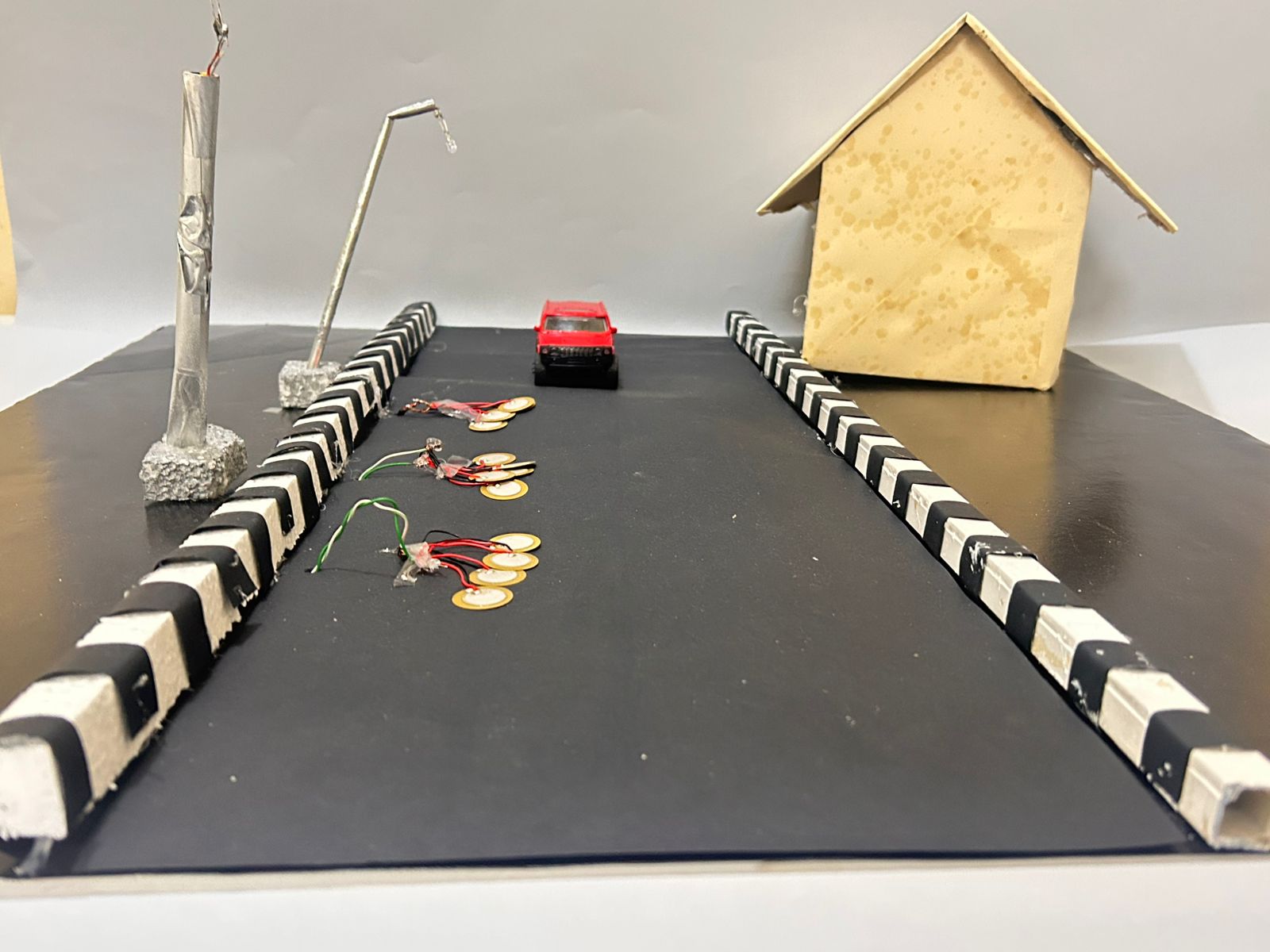
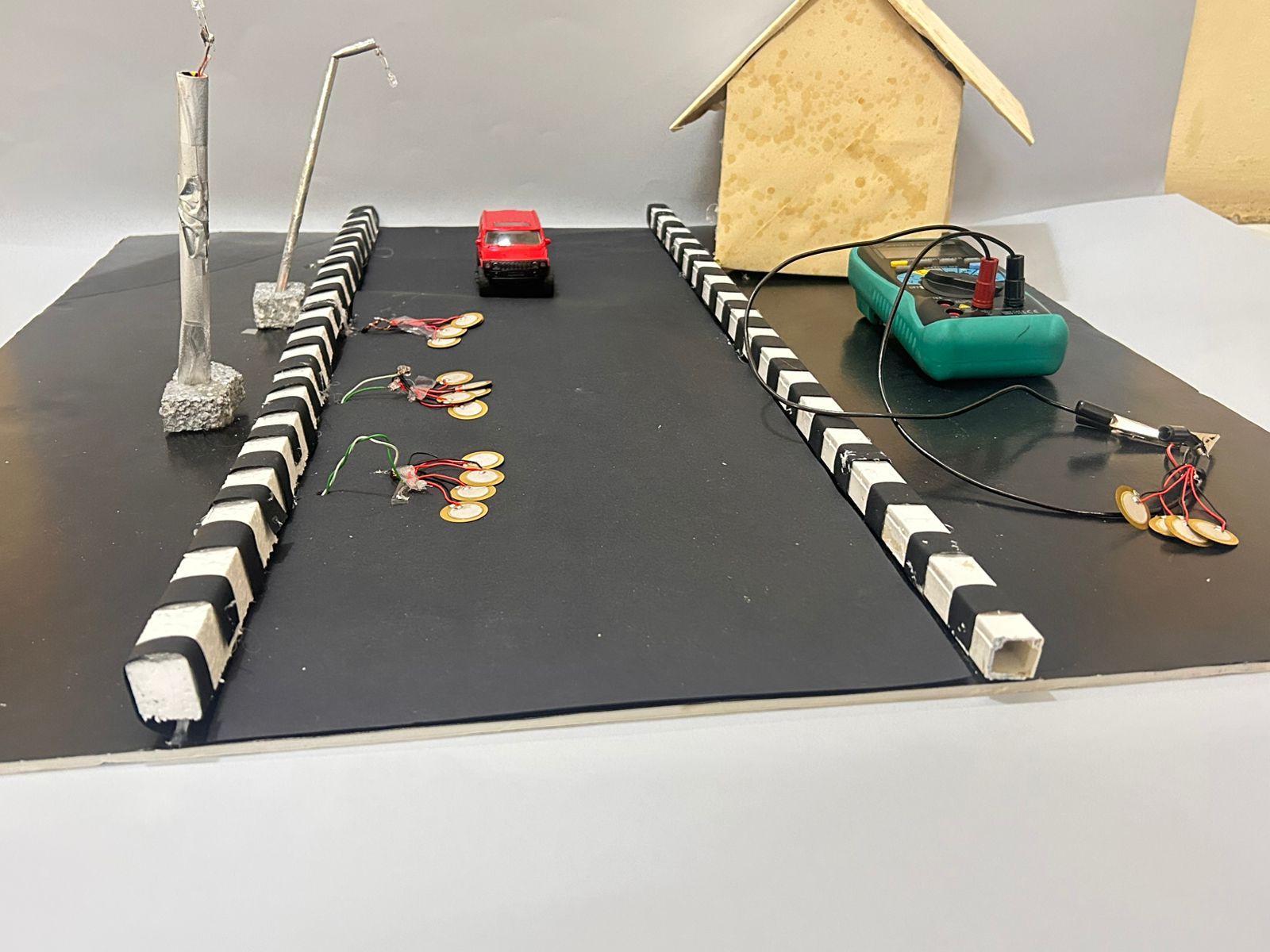
Securely attach each disc so they receive pressure or vibration reliably.
Connect all positive pads together and all negatives together to increase current and stabilize voltage.
Feed the parallel output into a bridge rectifier (4 × 1N4007) or a single diode arrangement to convert the AC pulses to DC.
Put a diode (1N4007) between the rectifier output and the storage capacitor to prevent the capacitor from discharging back into the piezos.
Use an electrolytic capacitor (10 µF–1000 µF, 25 V) across the DC rails to collect and smooth pulses.
If LEDs need a stable voltage or current, use a small boost converter or a proper LED driver; otherwise use a series resistor sized for the LED current.
Hook LED strings (with driver or resistor) to the capacitor output; test at low pressure first.
Measure open-circuit voltage and loaded voltage; add surge protection or a varistor if the piezos produce high spikes.
Piezos can produce high peak voltages but low current. Use caution, and realize you’ll need many discs plus good mechanical input or an energy-management circuit for reliable street-lighting.
No code available